|
This was
published on
Friday February
26, 2010 in the
Hot Springs
Sentinel Record
Lincoln hosts
OHV meeting
MARK
GREGORY
Associate editor
The
congressional
delegations of
two states are
pulling together
to ensure
“reasonable”
year-round
access to the
Wolf Pen Gap
area of the
Ouachita
National Forest
by off-highway
vehicles.
U.S. Sen.
Blanche Lincoln,
D-Ark., said
Thursday that
she hosted a
meeting in her
office in
Washington,
D.C., Wednesday
evening with
U.S. Rep. Mike
Ross, D-District
4, U.S. Sen.
Mark Pryor,
D-Ark., and U.S.
Sen. Tom Coburn,
R-Okla., and
U.S. Rep. Dan
Boren, of
Oklahoma, to
discuss how to
work together on
the issue.
“The Oklahoma
folks were
pretty
distressed, as
well,” Lincoln
said in a
telephone
interview
Thursday.
“We’re going
to continue to
work together;
we’re going to
continue to stay
on this issue.
We’re going to
push the
administration
to develop an
approach that
allows
reasonable,
year-round
access to Wolf
Pen Gap,”
Lincoln said.
“The
community (of
Mena) was
willing, and the
community has
been willing, to
work with them
on a plan that
works for
everybody. And I
think that was
obvious.”
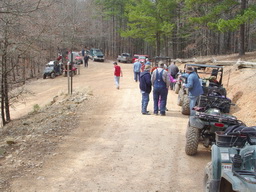
Public use of
OHVs, including
allterrain
vehicles, is now
allowed in the
ONF on routes
and in
cross-country
travel, except
for areas where
it is
specifically
prohibited. OHV
use is also
prohibited on
routes that are
obviously closed
or posted.
However, the
Department of
Agriculture in
2005 issued its
Final Rule for
Travel
Management,
which required
each of the
country’s 155
national forests
to designate a
travel system
for motorized
vehicles,
including OHVs.
The ONF
subsequently
developed the
Travel
Management
Project and
released a
Decision Notice
on motorized
travel,
including
off-highway
vehicles, in
early January.
Out of eight
alternatives
developed as
part of the
TMP’s
Environmental
Assessment, the
Forest Service
selected
Alternative E,
which allows no
cross-country
travel, except
for limited big
game retrieval,
and includes the
addition of
about 5.5 miles
of non-system
spur roads to
provide
motorized access
to dispersed
campsites.
Alternative E
also limits OHV
use on routes
within the Wolf
Pen Gap area to
holidays and
weekends from
May 15 to Sept.
15, due to
adverse effects
on water quality
through
sedimentation
that the Forest
Service says is
linked, in part,
to OHV use in
the area.
The Forest
Service plans to
implement the
decision in
April or May,
barring an
appeal that
results in its
being overturned
and remanded.
Forest
Service Chief
Tom Tidwell told
a hearing of the
Senate Energy
and Natural
Resources
Committee on
Wednesday that
27 appeals have
been filed
against the
decision notice,
and a few more
were expected.
Lincoln said
Thursday that,
in her opinion,
reasonable
access should
“absolutely”
include weekday
access.
“You look at
retired folks,
you look at the
veterans we’ve
heard from.
Those people are
much more likely
to want to go
during the week
than they are on
the weekends
when it’s more
hectic and more
congested,
perhaps,”
Lincoln said.
Reasonable
access should
also “certainly”
include more
year-round
access, she
said.
Lincoln, a
member of the
Senate Energy
and Natural
Resources
Committee, said
she pressed
Tidwell on
Wednesday to
“heed the
interests of the
local
communities” and
asked him to
work with
communities to
reach a
resolution on
the issue.
“I reiterated
to him that it
came as a real
shock to my
constituents,
because I think
that’s something
he needs to know
– the way that
it was handled.
It’s not just
the decision,
but the way that
it was handled
is critically
important.
“To get a
decision to
close the Wolf
Pen Gap area for
most of the year
... you miss
turkey season,
you miss spring
break, you miss
the fall
foliage, you
miss a lot when
you close it
down like that,
particularly
from a place
that’s been
available 24/7,
365 days out of
the year,” she
said.
“The local
Forest Service
(officials) had
worked with the
local folks to
come up with
something, and
then to get
something
completely
different out of
Washington ...
just wasn’t
fair.”
Lincoln,
chairman of the
U.S. Senate
Committee on
Agriculture,
Nutrition and
Forestry, met in
late January
with Secretary
of Agriculture
Tom Vilsack
regarding the
issue.
She said she
also discussed
the matter with
Vice President
Joe Biden during
a visit
Wednesday
morning. “I
brought this
issue up and
told him it was
one of my top
priorities,” she
said.
The EA
estimates the
number of OHV
users per year
at 17,000. Since
Alternative E
limits OHV use
on routes within
the area to
holidays and
weekends from
May 15 through
Sept. 15, the
Forest Service
estimates the
number of OHV
users would drop
to around 5,000
yearly, a
reduction of 71
percent.
The Forest
Service says in
the EA that
there are 16
businesses that
provide lodging
in the form of
rooms, cabins,
and recreational
vehicle sites in
close proximity
to the Wolf Pen
Gap area, with
occupancy
capacities that
range from eight
to 225.
“Even though
OHV access would
be provided from
the Wolf Pen Gap
area to other
parts of the
forest, so that
lodgers could
recreate in
other areas
during weekdays,
it would still
be expected that
these local
businesses would
see a reduction
in revenue under
Alternative E,”
the EA says.
Mena, which
is about 8 miles
northwest of the
Wolf Pen Gap
area, provides a
close source for
ATV rentals,
fuel,
restaurants,
lodging and
other retail
amenities, the
EA says.
One Mena
motel owner
estimated 20 to
30 percent of
their business
results from OHV
tourism. “It
would be
expected that
these Mena
businesses would
also see a
reduction in
revenue under
Alternative E,”
the EA says.
Lincoln said
she visited with
Mena officials
while in Little
Rock last week,
and “they were
just devastated.
They said, ‘You
know, we’re
going to lose 50
percent of our
revenue.’”
|